





Lowell’s downtown grew up around river powered mills and grain elevators in the 1800s, and today a number of those old brick buildings along the Flat River have been converted into homes and loft style living spaces rather than commercial space. Heating a converted mill building is a very different job than heating a house built as a house from day one, with tall ceilings, open floor plans, and thick brick walls that were never designed to hold ductwork. Sullivan Furnace, AC Repair & Plumbing has learned to work within those unusual spaces just as much as the standard homes filling Lowell’s surrounding neighborhoods.
Outside the historic core, Lowell looks a lot like the rest of West Michigan, with post war and newer subdivisions where furnace issues follow more familiar patterns.

Converted loft spaces in Lowell’s historic downtown tend to show a specific mix of heating complaints.
If you live in one of Lowell’s converted mill buildings, these patterns usually come from the space itself rather than a failing furnace.

Heating a converted mill building comes with a problem most standard homes never deal with, heat stratification. Warm air naturally rises, and in a loft space with a ceiling twelve or more feet high, that warm air can sit well above head height while the living space below stays noticeably cooler, even with a furnace working properly. Add in thick brick exterior walls that absorb cold and radiate it back into the room, and a furnace can end up fighting the building itself as much as the outdoor temperature.
Ductwork in these converted spaces is another challenge. Original mill buildings were never designed with a duct system in mind, so retrofit ductwork often runs exposed along ceilings or gets tucked into whatever gaps the building allows, which can limit how evenly air actually distributes through an open floor plan.
Outside the historic core, Lowell’s newer neighborhoods deal with more standard furnace wear, but even there, homes backing up to open farmland toward the edges of town can pick up extra wind exposure that adds to normal heating demand.
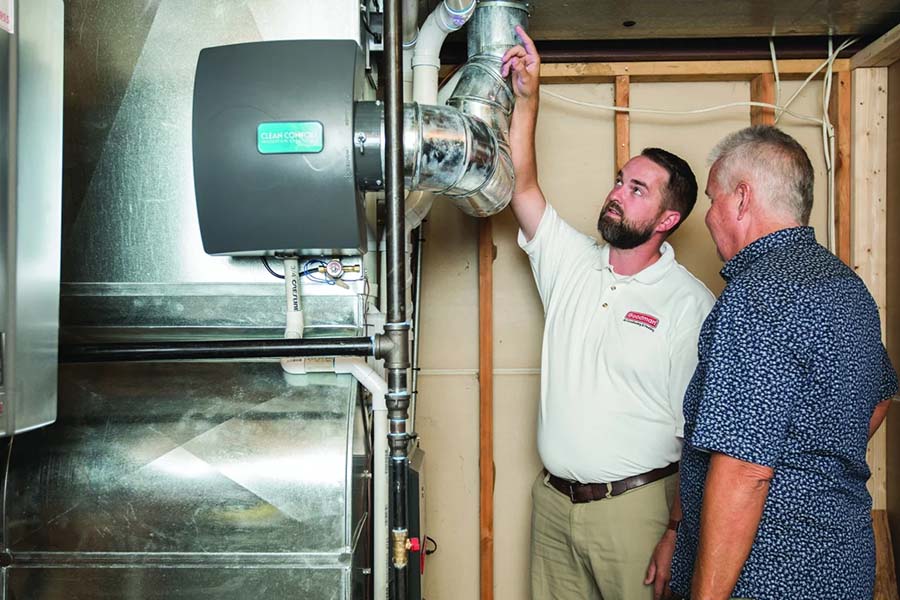
In Lowell’s converted loft spaces, we look at more than just the furnace itself, checking whether air distribution and fan settings are working against natural heat stratification in a tall, open room. Sometimes the fix is less about the equipment and more about how air actually moves through the space.
We also work within existing retrofit ductwork in these converted buildings, extending or adjusting runs without demanding invasive changes to exposed brick or original architectural details. For homes in Lowell’s standard neighborhoods, we handle the full range of furnace repairs from worn igniters to failing blower motors with the same straightforward approach.
Whatever kind of building you call home in Lowell, emergency furnace repair is available any time you need it.

Last month we visited Kevin, who lives in a converted loft above what used to be a grain related business along Lowell’s Main Street. His living space never felt as warm as the thermostat claimed, even though the furnace ran almost constantly trying to keep up.
Our technician found that warm air was stacking up near the exposed ceiling, well above where Kevin actually spent his time, while the furnace kept cycling based on a thermostat reading that never matched conditions at floor level. We adjusted the fan settings and relocated the thermostat sensor to a more representative spot in the room, and Kevin’s loft finally started feeling as comfortable as it looked.

Homeowners throughout Lowell trust Sullivan Furnace, AC Repair & Plumbing whether they live in a converted mill loft or a standard neighborhood home.
From a historic downtown loft to a home on the edge of Lowell’s farmland, we treat every furnace repair with the same level of care.
Tall, open spaces often experience heat stratification, where warm air rises above living level, which can make a room feel cooler than the thermostat suggests.
Yes, a thermostat in the wrong spot can read a temperature that does not match where people actually spend their time in the room.
Yes, buildings not originally designed for forced air heating often require creative ductwork solutions that work within the existing structure.
Homes on more exposed, open lots near farmland can experience extra wind related heat loss compared to homes with more shelter nearby.
Yes, we provide 24/7 emergency furnace repair throughout Lowell and the surrounding area.