





Coopersville still keeps more than half its land committed to farming, and that agricultural character shapes a lot of what we see on AC repair calls here. Many homes are century-old farmhouses with the kind of rustic Michigan basement common to properties this age, fieldstone walls, rough or partial concrete floors, and a level of dampness that newer construction simply doesn’t have. Sullivan Heating, Cooling, Plumbing has repaired systems throughout Coopersville’s farm properties and its newer neighborhoods near the interstate, and we know how differently these two types of homes need to be approached. When your AC needs attention, we’re ready to find out why.

We check the fundamentals on every call, refrigerant charge, electrical connections, and condenser condition, but in Coopersville’s older farmhouses we also pay close attention to basement conditions where equipment or ductwork is often located. A Michigan basement, with its fieldstone walls and minimal moisture barrier, tends to stay damp for much of the year, and that persistent humidity can corrode equipment or cause ductwork to sweat and eventually leak. We check for these conditions carefully rather than assuming a farmhouse basement behaves like a modern one.
For newer homes built in Coopersville’s growing subdivisions near I-96, the concerns are more typical, focused on confirming the system was sized and installed correctly for the home. Either way, we explain what we find before recommending any repair.
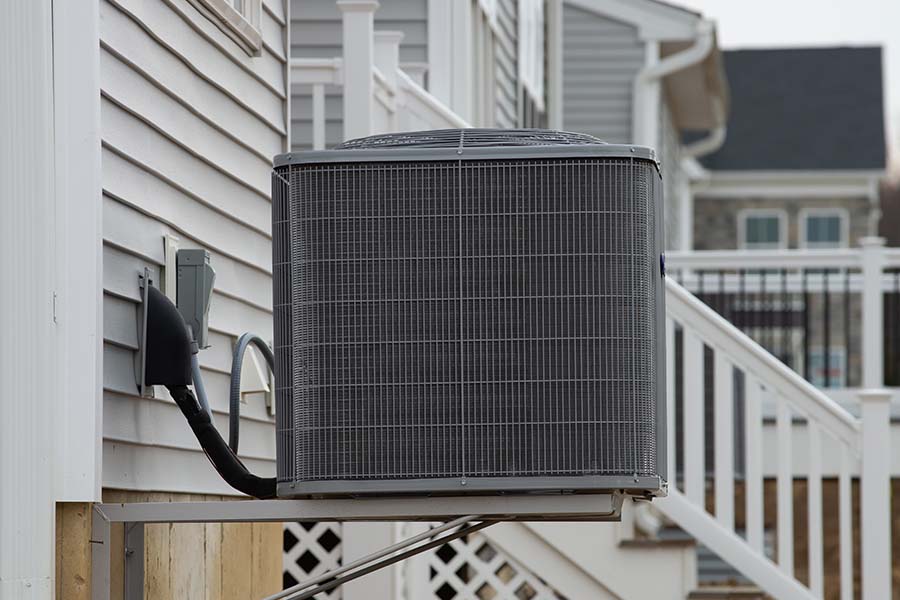
Whether your home is a century-old farmhouse or a newer build near the interstate, these signs point to a system that needs attention.
If your home is showing any of these signs, having a technician check both the equipment and its surrounding conditions can help identify the real cause.
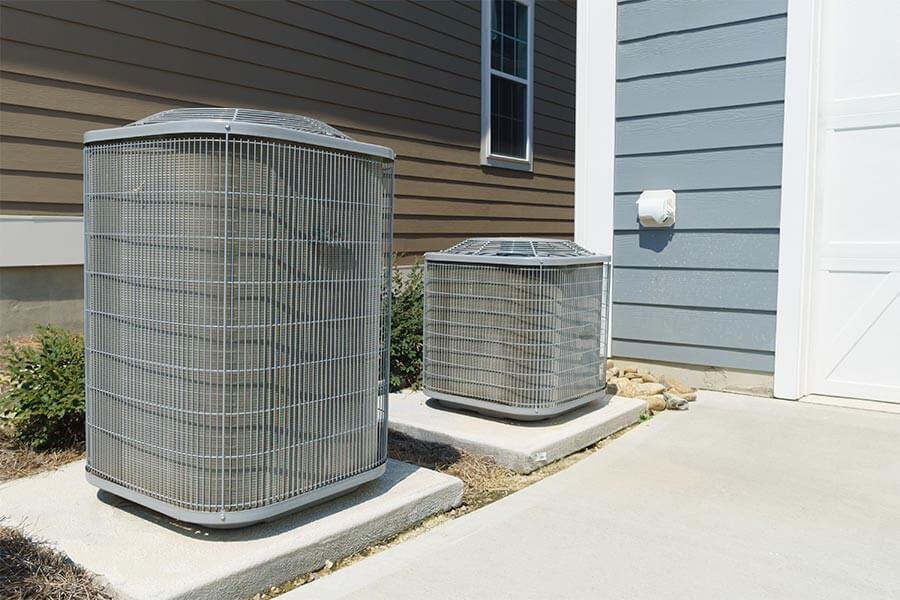
Coopersville’s older farmhouses, many dating back over a century, were built with basements meant for storage and utility rather than comfort, and that rustic construction still affects how well an AC system performs today. Persistent dampness in a Michigan basement can cause ductwork to sweat, corrode metal components, and create the kind of humid environment that shortens equipment lifespan faster than a typical modern basement would. Homeowners are sometimes surprised to learn that a musty smell coming from their vents traces back to basement conditions rather than the AC unit itself.
With over half the city still committed to agriculture, a lot of Coopersville properties also sit surrounded by open farm fields rather than mature landscaping, which means outdoor units on these properties often deal with more direct sun and less windbreak than homes in established, tree-lined neighborhoods. Newer subdivisions near the I-96 corridor tend to avoid both of these issues, though young landscaping there still means less shade for now than these homes will eventually have.

Frank, who owns a farmhouse just outside downtown Coopersville built around 1900, called us after noticing a persistent musty smell whenever his AC kicked on. His home had a classic Michigan basement, complete with fieldstone walls and a partial dirt floor, and the ductwork ran directly through that damp space on its way to the upper floors. Our technician found that years of basement humidity had caused several duct seams to corrode and separate, letting damp basement air mix with the conditioned air heading upstairs.
After sealing and insulating the affected duct sections, the musty smell cleared up and the system started performing noticeably better. Frank mentioned he’d always associated the smell with just having an old farmhouse, not realizing it was tied directly to his ductwork. It’s a situation we run into often in Coopersville’s older farm properties, where a basement built for a different era needs some extra consideration when it comes to modern cooling equipment.

From century-old farmhouses to newer homes near the interstate, Coopersville homeowners want a repair team that understands the full range of local housing. Here’s what sets us apart.
Sullivan Heating, Cooling, Plumbing brings the same level of care to every Coopersville home, whether it’s a farmhouse that’s stood for a century or a new build near the highway.
A Michigan basement typically has fieldstone or partial walls and a rough or dirt floor, and the extra moisture common in these spaces can corrode ductwork or equipment over time.
This is often caused by lingering dampness in the basement affecting ductwork, especially in older farmhouse basements that weren’t built with a modern moisture barrier.
Properties without much mature landscaping often expose outdoor units to more direct sun, which can increase the system’s workload compared to a shaded property.
Yes, ductwork running through a damp basement can develop corrosion or leaks over time, so a periodic inspection is worth scheduling.
Yes, newer homes typically have modern basements with proper moisture barriers, which significantly reduces the risk of the humidity related issues seen in older farmhouses.